


.png)
History of the Commodore Perry Building
From early American military fort to glass manufacturing pioneer to Midwest business hub, Toledo, Ohio has undergone multiple transformations since its founding in 1837. Looking out across the Maumee River, the downtown skyline stands as a shining testament to the city’s dynamic history. Every building has its own story to tell.
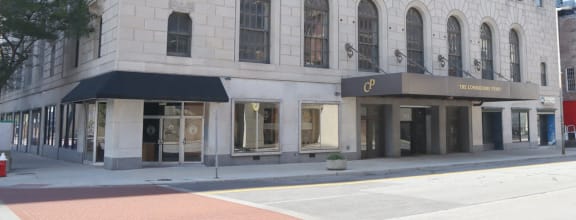
If you’ve found yourself gazing up at these architectural giants, then you’ve likely noticed the Commodore Perry Apartments located at the corner of North Superior Street and Jefferson Avenue. The 17-story brick building was opened in 1927 as a hotel where distinguished guests would stay during their visits to Ohio. Today, the Commodore Perry is one of Toledo’s most unique apartment communities, complete with bright, breathable floor plans, a world-class fitness center, and a beautiful lobby with checkered marble floors and historic lighting fixtures.
Let’s dive into the story of downtown Toledo’s Commodore Perry.
.png)
Early History
The Commodore Perry Hotel was built amidst the roaring 20s, a golden age for the construction of prestigious hotels. These were more than just places to sleep, they were the modern centers of culture. Due to its glamorous nature, the Commodore was named “The Palace of the Public” and sparked the creation of many similar hotels across the country desperate to mimic its success.
With its stunning second renaissance revival architecture, the Commodore Perry placed Toledo, Ohio onto the global stage of architectural innovation. Its namesake is in honor of naval commander Commodore Matthew Perry, whose military triumphs on Lake Erie helped America secure victory against the British.
Standing as the largest hotel between Chicago and Cleveland during that era, the Commodore Perry was truly a sight to see. The dazzling architecture drew in a multitude of distinguished guests like the King and Queen of Greece, world leaders like President Harry Truman, and a throng of celebrities. The “King” himself, Elvis Presley, performed at the hotel during the week of Thanksgiving 1956. He gave a show-stopping performance and afterward got into a fistfight with another patron!
Of course, the rich history of the Commodore Perry was intimately linked with Toledo’s rise during the early part of the 20th century. The city saw its population double in the 1920’s due to an increase in manufacturing jobs. The Commodore Perry, along with Toledo as a whole, was succeeding on all fronts.
Unfortunately, the stock market crash of 1929 and the subsequent economic downturn of The Great Depression left no hostages. After several ownership and management changes over the decades, projects to comprehensively renovate the hotel never materialized. Over the next decades, The Commodore Perry sustained itself by renting spaces to local institutions, but inevitably, the once esteemed hotel found itself vacant.

Second Renaissance Revival
Commodore Perry was built to impress with its 17-stories stretching upwards to 275 feet. It’s not difficult to understand why it was such a sight to behold in the 1920s. The textured yellow brick face, limestone detailing, and terra cotta flourishes all contribute to this stunning example of second renaissance revival architecture. The exterior is an homage to 14th through 17th century Italian aesthetics, which sought to reimagine the classical components of renaissance architecture while adjusting them to contemporary building techniques and approaches. Needless to say, the architectural team did a remarkable job, as the building is still standing tall nearly 100 years later. The Commodore Perry, along with other second renaissance revival giants, continues captivate onlookers while bridging the gap between the historic and modern.
Toledo Life in Murals
In 1966, the building underwent its most extensive renovations including the addition of long canopies near the front entrance, automatic sliding doors, and precast concrete columns that gave it the iconic look it displays today. Upon entering the lobby, the restored marble floors still hold the same charm that they did in the 1940s.
Another special feature is the murals located in the current community space on the first floor. Painted by William Matthews in 1934, they depict the city’s burgeoning social scene with dazzling texture and realism. Inside of the old grand ballroom there are at least four Don Quixote murals painted on-site by Matthews. They are still intact and remain in good condition but are currently closed to the public. If you ever get the opportunity to view these remarkable spaces, make sure you don’t disturb the ghosts that many believe to live there …
If you’re unfamiliar, the ingenious story of Don Quixote is one of the world’s foremost literary treasures. Written in 1605, the novel has become one of the most translated texts in human history. Matthews’ murals depict the long enduring life of a low-born Alonso Quijano, who after reading many romance novels, loses all sense of his reality and decides to become a knight determined to restore chivalry. It’s a true gem of a novel that became inspiration for future literary masterpieces like The Three Musketeers and Gulliver’s Travels. Though some parts of the mural sustained water damage, much of the knight’s story can still be read through these tapestries encircling the grand ballroom.

Commodore Perry Building Today
Any building that has stood for as long as the Commodore Perry has many stories to tell. The exterior, a tribute to one of the most eccentric architectural styles of the 20th century, shines brightly to this day. The interior, while just a shadow of its former hotel glory, is still one of the most impressive displays of historic renovation that Toledo has to offer.
Now that Commodore Perry has transitioned from hotel rooms to apartments, the story has evolved into one of a living community enveloped by history. The homes are now filled with amenities like double-galley kitchen layouts, stainless steel appliances, and beautiful views of the city, and residents can connect in community spaces like the internet café and fitness center. Yes, the story of the Commodore Perry has undoubtedly transformed, but it’s a transformation that we are honored to be a part of.
Schedule your tour today and discover how our team at Commodore Perry has blended modern living with a historic and timeless feel.